PSY 355 Psychology & Media in
the Digital Age
This page was last modified on March 2, 2026
|
|
PSY 355 Psychology & Media in
the Digital Age
This page was last modified on March 2, 2026 |
Social Media and Mental Health
Mental Health in the United States
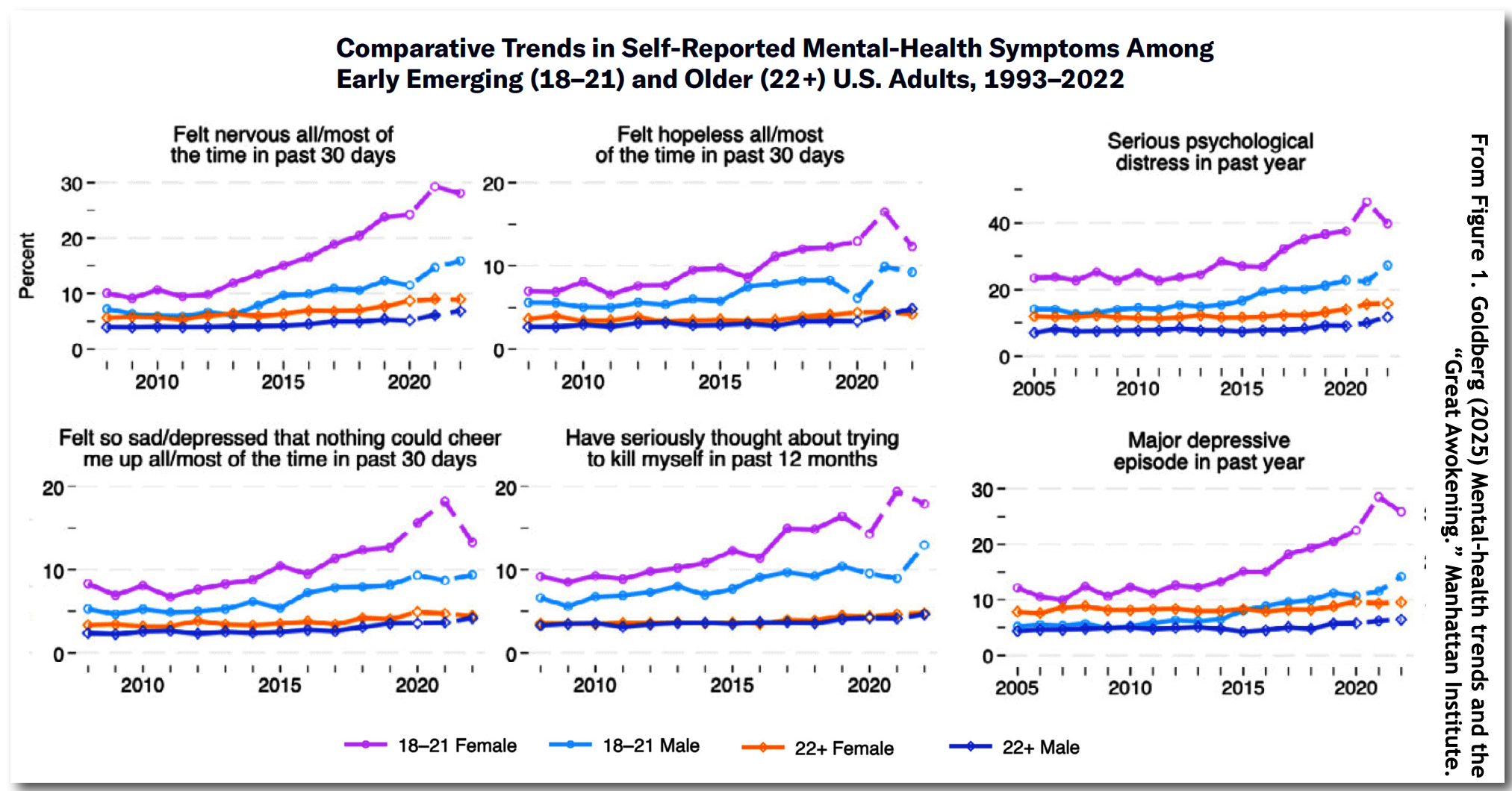
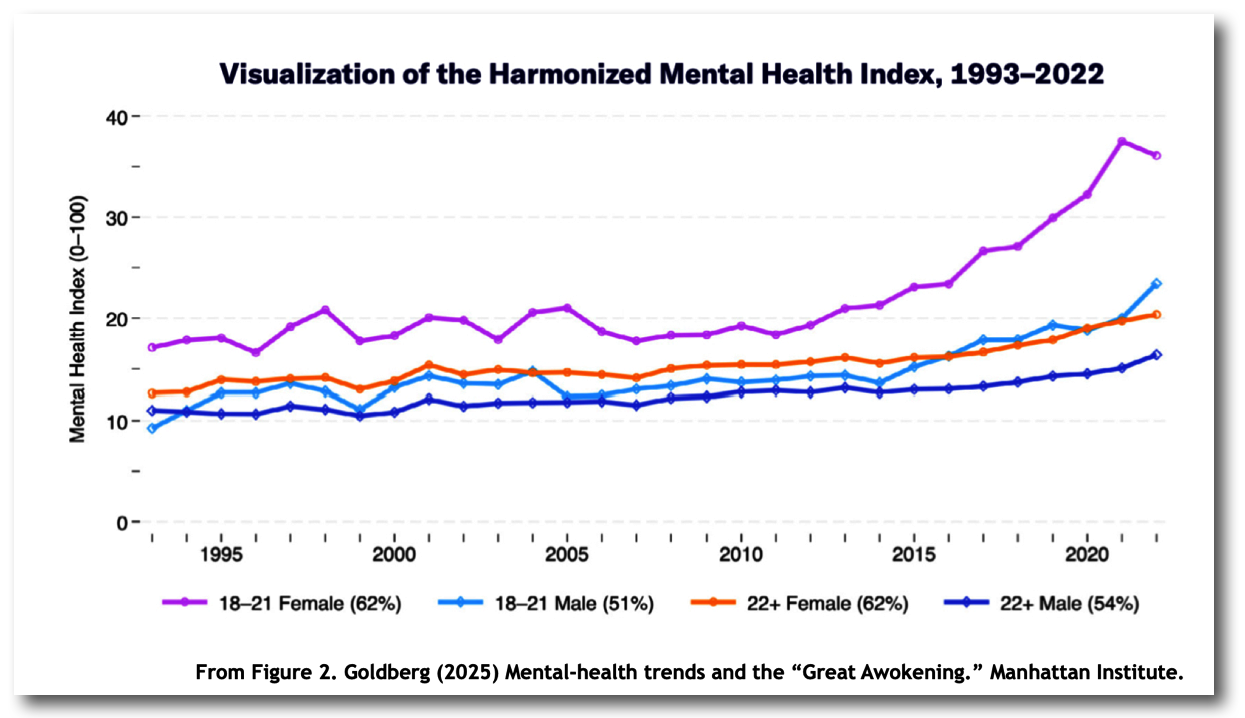
What have been the trends in mental health in the United States over the last several decades?
A. Adults 18+ years
What trends and differences do you see in the various graphs above?
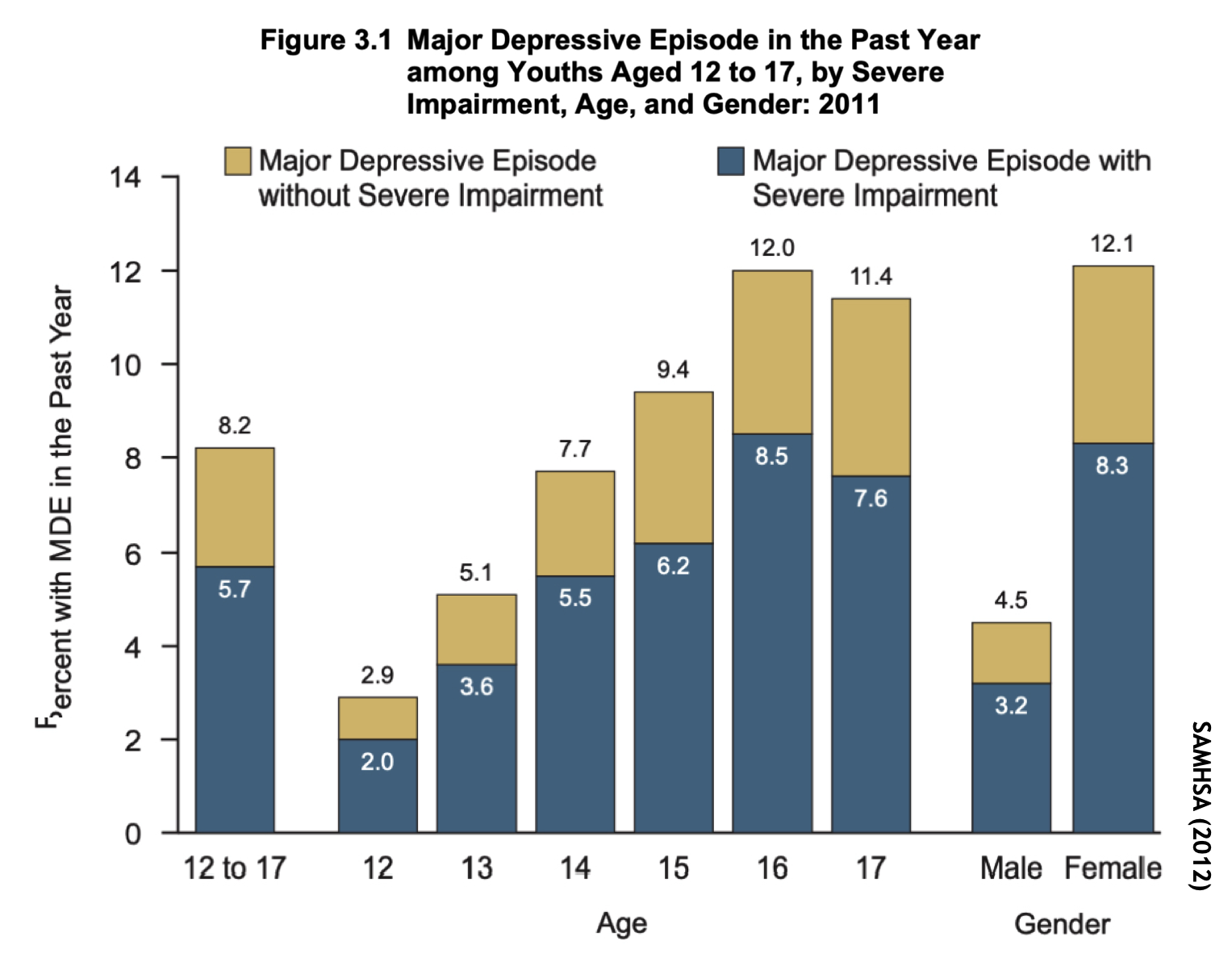
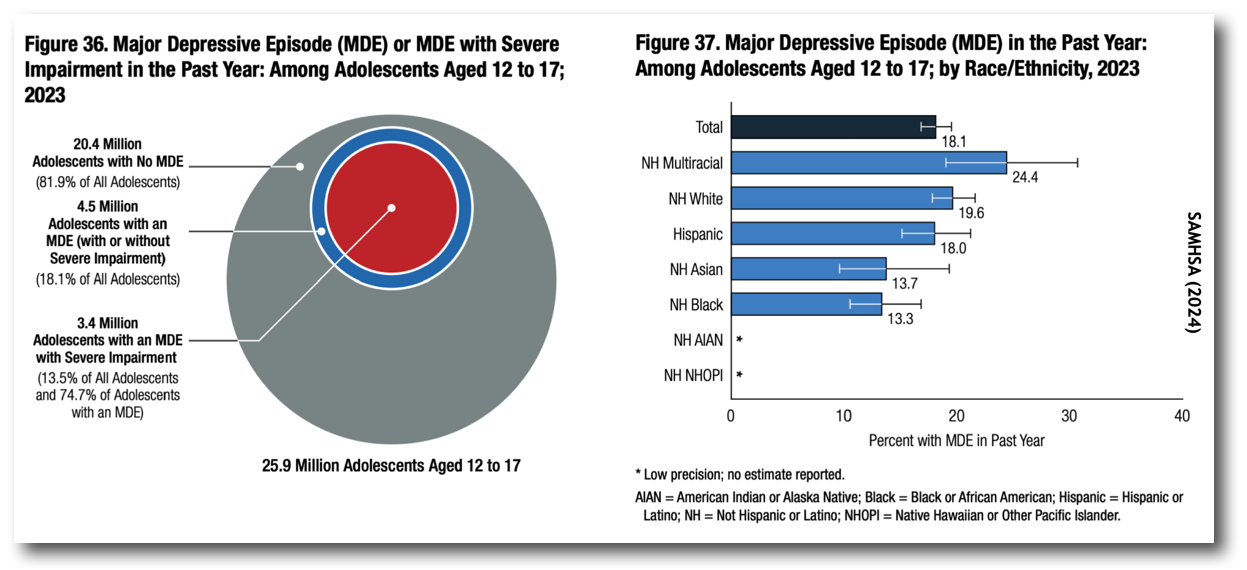
B. Adolescents (12-17 years): Depression
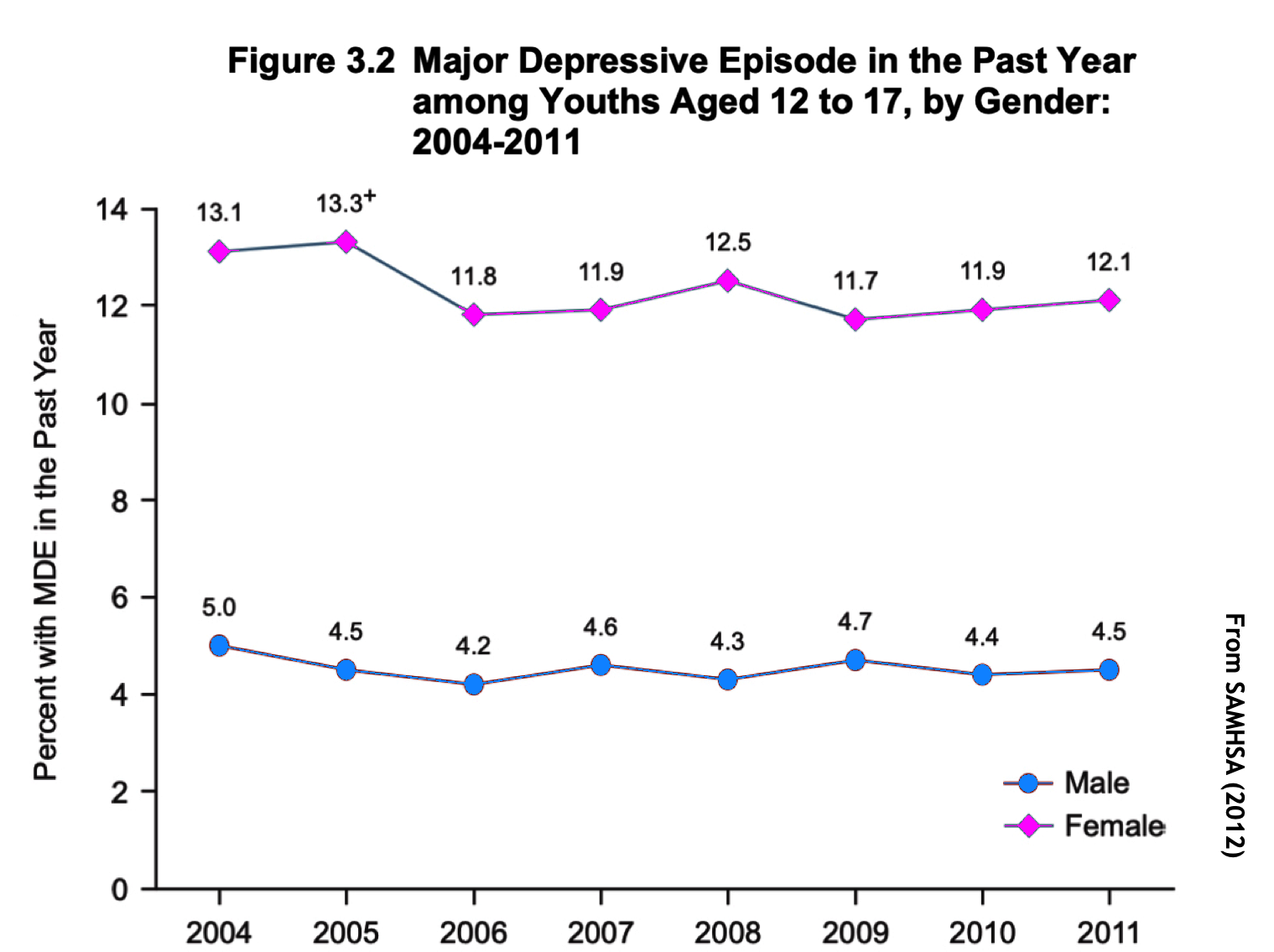
- What differences are noticeable among 12-17 year olds experiencing Major Depressive Episodes (MDE) by gender, age, and across a decade?
Jonathan Haidt & the Anxious Generation Thesis
Jonathan Haidt (b. 1963; name pronounced as 'height') is a social psychologist who teaches at the New York University Stern School of Business. Prior to his 2024 book about social media and childhood described below, he was most well known for his work on the psychology of morality, moral emotions, and what is known as “Moral Foundations Theory.”
Moral Foundations Theory (as described in his 2012 book, The Righteous Mind, and later updated) argues that differences in how people respond to challenging moral issues can be understood as resting on six moral foundations. These are
The application of moral foundations theory has primarily focused upon political ideology and what kinds of political stands individuals take on moral issues such as abortion, same-sex marriage, etc. (progressive vs. conservative).
- Care vs. harm
- Fairness vs. cheating
- Loyalty vs. betrayal
- Authority vs. subversion
- Sanctity (purity) vs. degradation
- Liberty vs. oppression
A. Haidt discusses the central points of his 2024 book: The Anxious Generation: How the Great Rewiring of Childhood Is Causing an Epidemic of Mental Illness
As you listen to this conversation, have paper and a pencil/pen and note down what sounds to you as true or part of your life.
- Ted Talk Podcast: Are smartphones ruining childhood? August 2024.
- Jonathan Haidt chats with Elise Hu in TED Talks Daily
- Today we will listen to the first 13'25" of the conversation
Haidt 's Thesis
- What point or points did Haidt make which you agree with or was part of your own childhood?
- What point or points did Haidt make which you disagree with or did not experience as you were growing up?
- The Great Rewiring: The transition from, and decline of, free play, independent exploration, and risk-taking in the real world, replaced by constant, curated, virtual interaction.
- The "Phone-Based" Shift: Beginning around 2010–2012, smartphones and social media transformed adolescent social life, creating a "paranoid" and isolated environment that fuels anxiety, depression, and self-harm.
- Safetyism & Overparenting: A societal trend of removing risk from the physical world has hindered the development of resilience and independence in children.
- Proposed Solutions: To combat this, Haidt advocates for four main actions:
- No smartphones before high school (age 14),
- no social media before age 16,
- phone-free schools, and
- more unsupervised"free play" in the real world.
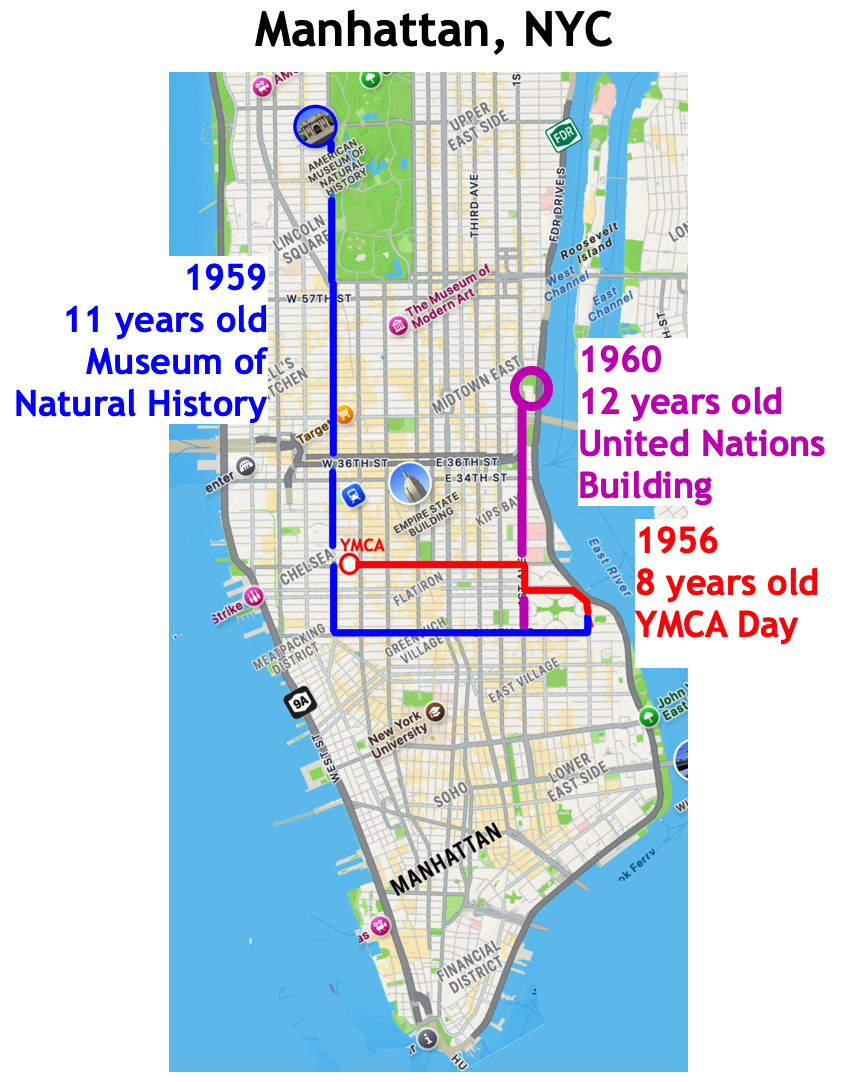
1950-1960s New York City • Free-Range Experience of Urban Childhood
References
Goldberg, Z. (2025, April 3). Mental-health trends and the “Great Awokening.” Manhattan Institute. https://manhattan.institute/article/mental-health-trends-and-the-great-awokening
Substance Abuse and Mental Health Services Administration [SAMHSA] (2012). Results from the 2011 National Survey on Drug Use and Health: Mental Health Findings, NSDUH Series H-45, HHS Publication No. (SMA) 12-4725. Rockville, MD: SAMHSA. https://library.samhsa.gov/product/results-2011-national-survey-drug-use-and-health-nsduh-mental-health-findings/sma12-4725
Substance Abuse and Mental Health Services Administration [SAMHSA] (2024). Key substance use and mental health indicators in the United States: Results from the 2023 National Survey on Drug Use and Health (HHS Publication No. PEP24-07-021, NSDUH Series H-59). Center for Behavioral Health Statistics and Quality, Substance Abuse and Mental Health Services Administration. https://www.samhsa.gov/data/report/2023-nsduh-annual-national-report
This page was first posted on 3/2/2026