![[Home]](../psy101graphics/homep.gif) Nov 28, 2025 |
PSY 101
![[Psychology Images]](../psy101graphics/intro_25.jpg) Class 40: Treatment of Mental
Disorders I • General Issues - Insight &
Behavioral Therapies (Outline) Class 40: Treatment of Mental
Disorders I • General Issues - Insight &
Behavioral Therapies (Outline) |
|
Nov 28, 2025 |
PSY 101
Class 40: Treatment of Mental
Disorders I • General Issues - Insight &
Behavioral Therapies (Outline) |
|
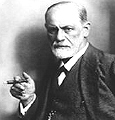
The Western notion of "Psychotherapy" began at the turn of the 20th century with Sigmund Freud. In 1880, his colleague, Josef Breuer, treated a patient, Anna O. (Bertha Pappenheim), for "hysteria" -- a set of physical symptoms like headaches and numbness and paralysis of her right arm. He found that she got better -- her symptoms cleared -- when he had her talk about her emotional experiences in the past. Freud used this insight and developed a "talking cure" which he called psychoanalysis. He treated patients with various physical and psychological difficulties by having these patients talk about their fantasies, memories, dreams, and other emotionally-charged subjects.
To this day, we often think of the treatment of psychological disorders as an extension of Freud's work. But, in actuality, there are many alternative ways of treatment besides the psychoanalyst's couch and talking about dreams!

Many would say that the 1990s brought a new approach to the treatment of psychological disorders in the experience of many Americans: the widespread use of medications (drugs) which require very little professional time (which is costly) and can be easily administered. 
| Treatment: General Issues |
Treatments
There are at least 400 recognized forms of "therapy" for the treatment of mental disorders.
- Insight Therapies: Treatment by thinking
- Behavior Therapies: Treatment by doing (learning; having experiences)
- Biomedical Therapies: Treatment by affecting the body
Clients
Therapists
- Roughly 15% of the US population seeks treatment for mental health issues every year but 30% experience a disorder).
- Roughly 50% of visits to physicians (medical doctors) involve psychological issues.
- Psychologists
- Psychiatrists
- Psychiatric Social Workere
- Other professionals: psychiatric nursing, counselors, marriage and family therapists, clergy, drug counselors and others
Verbal/Insight Therapies
1. Insight Therapies: Treatment by thinking and talking
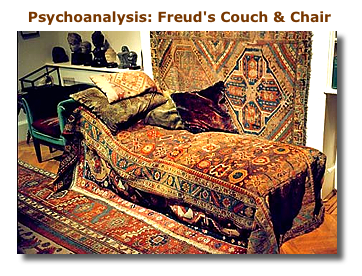
- Psychoanalysis (Freud's original form of therapy) and Psychodynamic Psychotherapy
- Client/patient speaks whatever comes to mind (thoughts, dreams, etc.) and search for significant patterns, symbols, and resistances.
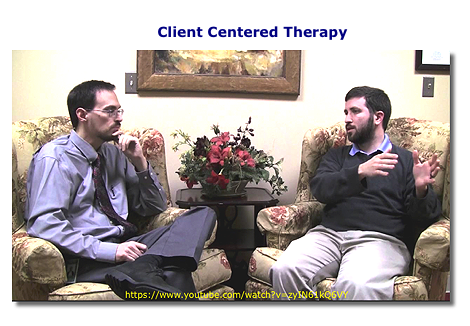
- Client-Centered Therapy developed by Carl Rogers
- Three fundamental conditions: (1) unconditional positive regard, (2) a high level of empathetic understanding, and (3) a warm and accepting environment.
Cognitive-Behavioral Therapy (CBT; uses both cognitive & behavioral approaches) pioneered by Aaron T. Beck
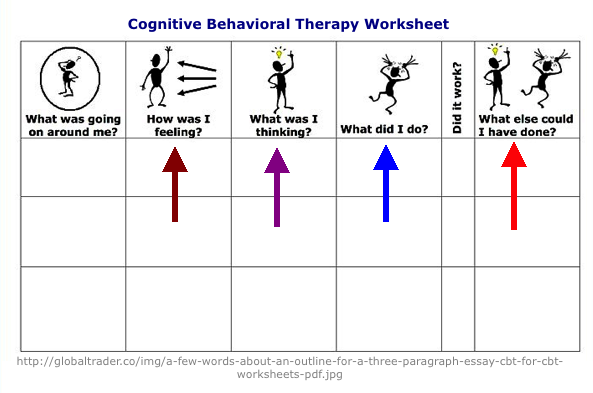
- Identify automatic negative thoughts:
- Substitute more reasonable thoughts
2. Behavior Therapies: Treatment by doing (learning)
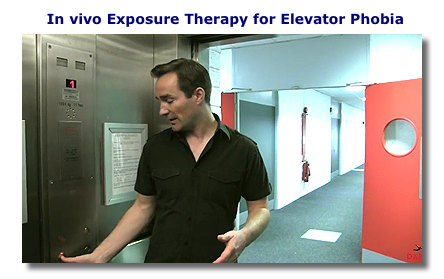
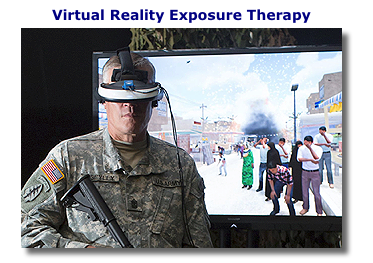
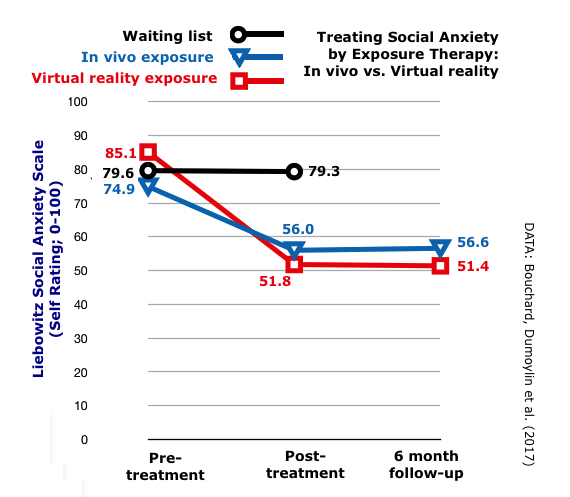
- Exposure Therapy (ET)
- In real life (in vivo)
- In virtual reality simulation
YouTube: Exposure Therapy for Snake Phobia (12 min.)
This page was originally posted on 12/01/03