![[Home]](../psy101graphics/homep.gif) Nov 28, 2025 |
PSY 101
![[Psychology Images]](../psy101graphics/intro_25.jpg) Class 40: Treatment of Mental
Disorders I • General Issues - Insight &
Behavioral Therapies Class 40: Treatment of Mental
Disorders I • General Issues - Insight &
Behavioral Therapies |
|
Nov 28, 2025 |
PSY 101
Class 40: Treatment of Mental
Disorders I • General Issues - Insight &
Behavioral Therapies |
|
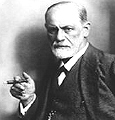
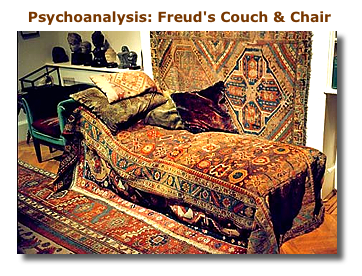
The Western notion of "Psychotherapy" began at the turn of the 20th century with Sigmund Freud. In 1880, his colleague, Josef Breuer, treated a patient, Anna O. (Bertha Pappenheim), for "hysteria" -- a set of physical symptoms like headaches and numbness and paralysis of her right arm. He found that she got better -- her symptoms cleared -- when he had her talk about her emotional experiences in the past. Freud used this insight and developed a "talking cure" which he called psychoanalysis. He treated patients with various physical and psychological difficulties by having these patients talk about their fantasies, memories, dreams, and other emotionally-charged subjects.
To this day, we often think of the treatment of psychological disorders as an extension of Freud's work. But, in actuality, there are many alternative ways of treatment besides the psychoanalyst's couch and talking about dreams!


Many would say that the 1990s brought a new approach to the treatment of psychological disorders in the experience of many Americans: the widespread use of medications (drugs) which require very little professional time (which is costly) and can be easily administered. 
| Treatment: General Issues |
Treatments
There are at least 400 recognized forms of "therapy" for the treatment of mental disorders. These represent one or more of the following general modalities of treatment
- Insight Therapies: Treatment by thinking
- Psychoanalysis and psychodynamic psychotherapy (a close cousin to psychoanalysis) are only two of many insight therapies
- Cognitive Therapy (which also uses some behavioral approaches) is the most widely-used "thinking" based therapy in the United States.
- Use of verbal exchange to promote insight in the thinking of a client
- Behavior Therapies: Treatment by doing (learning; having experiences)
- Grounded in learning theory (classical conditioning, operant conditioning, social learning)
- Focuses upon what people actually do and what happens to them as a result
- Biomedical Therapies: Treatment by affecting the body
- Medications (Drugs): This is such a big topic it would need a full other class.
- Electroconvulsive Therapy (ECT) = "Shock Therapy" (mostly used for severe forms of depression)
- Innovative deep brain stimulators
Clients
Therapists
- Roughly 15% of the US population seeks treatment for mental health issues every year (even though almost 30% experience a disorder).
- Roughly 50% of visits to physicians (medical doctors) involve psychological issues.
Who treats psychological disorders?
- Psychologists: Ph.D. or Psy.D. degree (4-6 years post college which includes 1 year of internship; afterwards, usually at least 1 post-doctoral year of supervised work)
- Clinical Psychologists: Tend to treat more serious or difficult disorders
- Counseling Psychologists: Tend to treat somewhat less serious disorders or difficulties of everyday life
- Psychiatrists: MD = physician who specializes in diagnosing and treating mental disorders. Medical school (4 years) + 1 year internship + 2-4 years psychiatric residency.
- Psychiatric Social Worker: MSW degree/LMSW as licensed practitioner. Social worker has 2+ years post college training which includes both classroom work and supervised clinical experience
- Other professionals: psychiatric nursing, counselors, marriage and family therapists, clergy, drug counselors and others
Verbal/Insight Therapies
1. Insight Therapies: Treatment by thinking and talking
- Psychoanalysis (Freud's original form of therapy) and Psychodynamic Psychotherapy (a close cousin to psychoanalysis) are only two of many insight therapies.
- In both forms of treatment, clients/patients talk about whatever comes to mind, their dreams, experiences in daily life, etc., and the therapist helps them identify unconscious motives and conflicts that affect how they live their lives (in the form of symbols, themes, resistances, etc.)
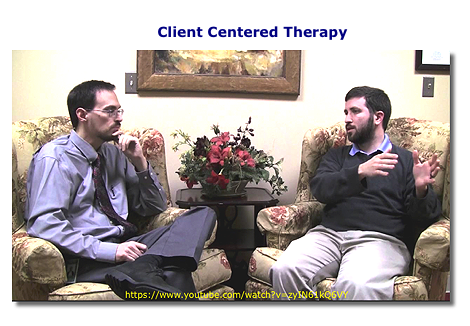
- Client-Centered Therapy = a kind of counseling treatment first advocated by the humanist psychologist, Carl Rogers, in which a client and a therapist meet together to discuss what is happening in the client's life. Rogers argues that the therapist needs to provide the client with three fundamental conditions: (1) unconditional positive regard, (2) a high level of empathetic understanding, and (3) a warm and accepting environment. Clients experiencing these conditions will find themselves growing psychologically healthier
Cognitive-Behavioral Therapy (CBT; uses both cognitive & behavioral approaches)
- Developed by several therapists including Aaron Beck during the 1960s & 1970s
- Is the most widely-used "thinking" based therapy in the United States.
- Goal: to help the client identify, challenge, and change maladaptive beliefs and negative thinking.
- Focus of CBT includes how physical sensations are linked to thoughts which are linked to emotions which are linked to behaviors (What was my body feeling? What was I thinking? What was I feeling? What did I do as a result? Could I have done something else?)
Two major activities frequently carried out in CBT include:
- Identify automatic negative thoughts:
- I always fail tests
- I can never do well in school
- People don't like me
- Substitute more reasonable thoughts
- I'm prepared for this test, so, I'll probably do okay
- school may be challenging, but most people like me actually do well
- while some people may not like me, a whole lot of others do like me.
Cognitive therapists do not automatically dismiss what their clients think or believe. However, they work with the clients to test out their assumptions and beliefs and suggest many of ways of dealing with or understanding their situation. The therapist is a very active participant in therapy.
Cognitive therapy has proven quite effective with a wide variety of problems like mild to moderate depression and takes a relatively short time, e.g., perhaps 1 or 2 sessions per week for 3 to 6 months (10-30 sessions).
2. Behavior Therapies: Treatment by doing (learning)
- Grounded in learning theory (classical conditioning, operant conditioning, social learning)
- Focuses upon what people actually do and what happens to them as a result
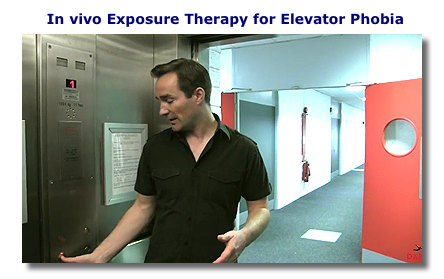
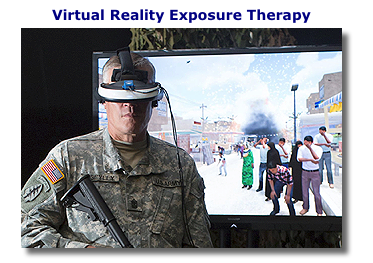
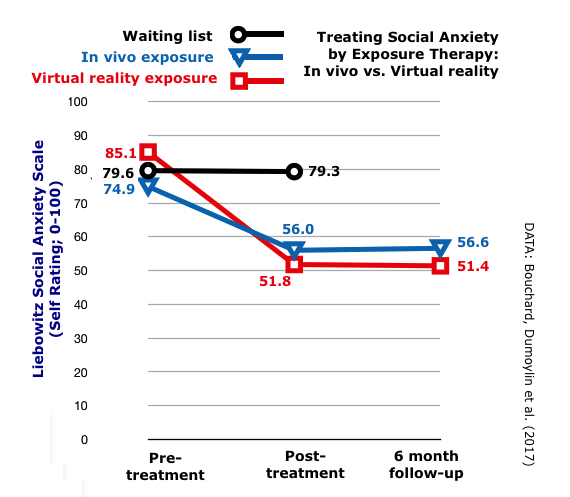
- Exposure Therapy (ET). Used with clients who have phobias and other anxiety disorders (including PTSD). Clients are exposed to feared object/situation, etc. in a very gradual and structured way. Their anxiety in the presence of the feared object/situation will gradually go away. When done by a trained therapist, this therapy will hope most clients.
YouTube: Exposure Therapy for Snake Phobia (12 min.)
- New learning 1 (cognitive): What you fear will happen won't happen (phobia is a "prediction error")
- New learning 2 (physiological): When feared outcome doesn't happen, the body begins to respond more calmly; we cannot maintain heightened levels of fear and anxiety when what is feared doesn't come true
- In vivo: Exposure done "in real life" (IRL)
- In virtuo: Exposure done by Virtual Reality (= VRET)
This page was originally posted on 12/01/03