![[Home]](../psy101graphics/homep.gif) Oct 30, 2025 |
Class 27: Personality III: Narcissism |
|
Oct 30, 2025 |
Class 27: Personality III: Narcissism |
|
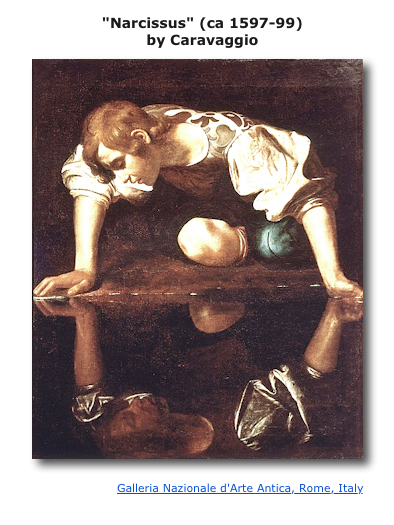
Narcissism = a personality trait marked byThe word "narcissism" is based on the ancient myth of the young boy, Narcissus, as told by the Roman poet, Ovid, in book III of his famous work The Metamorphoses.
- an inflated sense of importance
- a need for attention and admiration
- a sense of entitlement, and
- a tendency to exploit others
Narcissistic Personality Inventory (NPI) by psychologists Robert Raskin and his colleagues in the the late 1970s and early 1980s. Examples of items on NPI include
|
|
Raskin found that responses to the NPI illustrated seven general factors associated with narcissism:
More recent work (Miller et al, 2017) offer an alternative set of characteristics of individuals who are narcissistic or show Narcissistic Personality Disorder: "grandiosity, callousness, entitlement, exploitativeness, and noncompliance, as well as traits such as assertiveness, exhibitionism, and risk taking"
- authority (dominance, pushing self ahead)
- exhibitionism
- superiority
- vanity
- exploitativeness
- entitlement, and
- self-sufficiency (Raskin & Terry, 1988)
Individuals who are narcissistic
- have very highly positive self-concepts which can be easily threatened. Their self-esteem is fragile.
- crave admiration and approval from others.
- tend to obsess (talk and think about) their body and their achievements.
- spend a lot of effort to impress others and brag about how well they have done.
- express/show relatively little empathy for people who are in difficult circumstances
- tend to be found more among those who are wealthy or upper class
Initial impressions of narcissists tend to be quite positive: charming, humorous, self-assured, charismatic
Eventually, others tend to view narcissists as arrogant, selfish, and unlikable.
In everyday life, narcissists tend to be represented among those who are successful leaders and strongly entrepreneurial (business people) as well as celebrities (singers, actors, etc.).
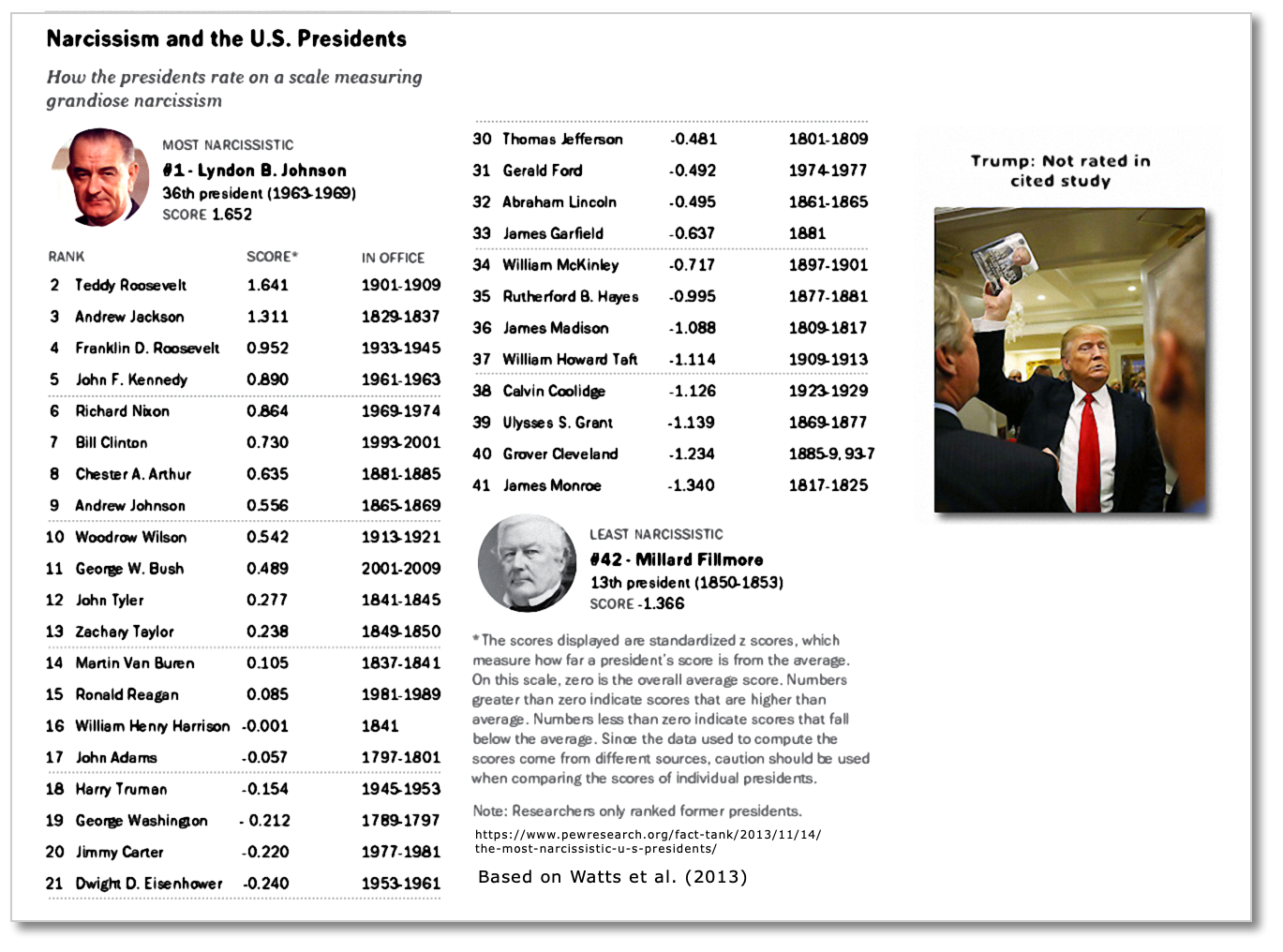
American presidents have been rated as more narcissistic than the general population and are successful when they are able to manage crises, persuade the public, and achieve legislative victories. But they can be undermined by their tendency to ethical lapses, responding in a hostile way to criticism, and manipulating others for their own good rather than the nation's
Types of Narcissism: Grandiose versus Vulnerable Narcissism
- Grandiose narcissism refers to individuals who are explicitly and outwardly immodest, self-promotional, self-enhancing, and entitled, and it combines the traits of disagreeableness (also known as antagonism) and agentic aspects of extraversion
Trump • Big 5 and the Dark Triad: "Can Anyone Be Objective About Donald Trump?" (Nai & Meier, 2019)
There is a growing number of psychological research papers and studies applying personality theory to political and celebrity figures. The research literature on the former President offers a very consistent set of conclusions by personality psychologists. This Nai & Meier (2019) study is particularly fascinating.
A. Very Strong Disagreements about Trump's Personality according to both Party Affiliation and Ideological Beliefs by Ordinary Citizens
B. Scholars/Experts (N = 200) Show Strong Similarities in Evaluating Trump's Personality despite Ideological Differences
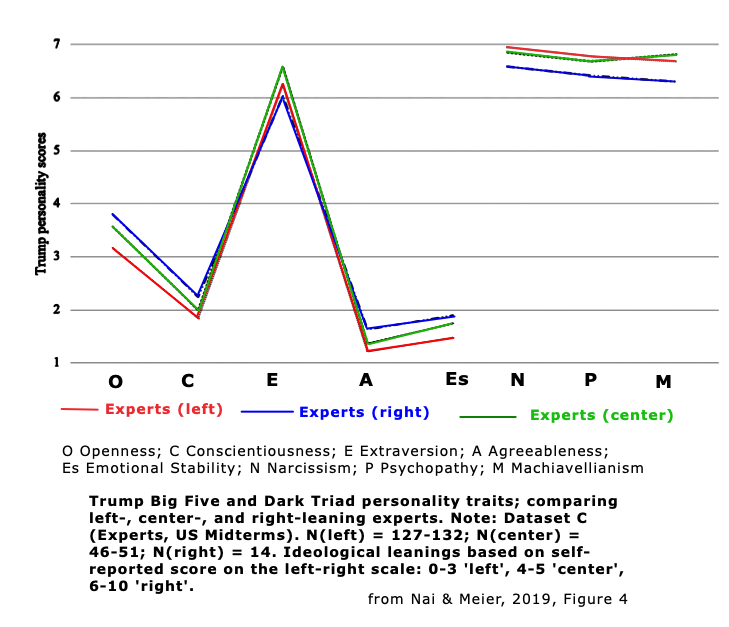
- The panel of scholar/experts from left-, center-, and right-leaning ideologies evaluated Trump's personality on both the Big 5 Personality Traits and the "Dark Triad" (Narcissism, Psychopathy, and Machiavellianism)
- See the results in the figure below
- The experts evaluate Trump generally as having low levels of Conscientiousness, Agreeableness, and Emotional Stability (i.e., Neuroticism) as well as high levels of Narcissism, Psychopathology (being cold or unconcerned with the needs of others), and Machiavellianism (a willingness to manipulate, deceive, and use others for your own benefit
This study's title was "Can anyone be objective about Donald Trump?" and the authors seem to say:
- "NO" if you are an ordinary citizen in the U.S., but
- "YES" if you are someone who is trained as an expert despite your own political/ideological beliefs.
- Note, by the way, that according to the "Goldwater Rule" of the American Psychiatric Association, it is unethical for a psychiatrist "to offer a professional opinion unless he or she has conducted an examination and has been granted proper authorization for such a statement." There are significant arguments in the mental health field about whether this rule adopted in 1973 serves the public interest. Some argue that the importance of receiving expert opinions about the mental status of powerful public officials so that the voters of the country can factor those opinions into their decisions on Election Day is the most pressing value.
Trump as 47th President (re-elected 2024)
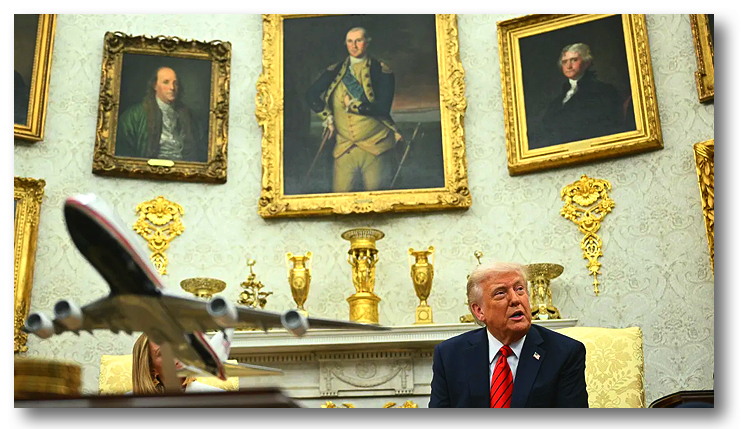
- Continued concern & controversy about Trump's personality
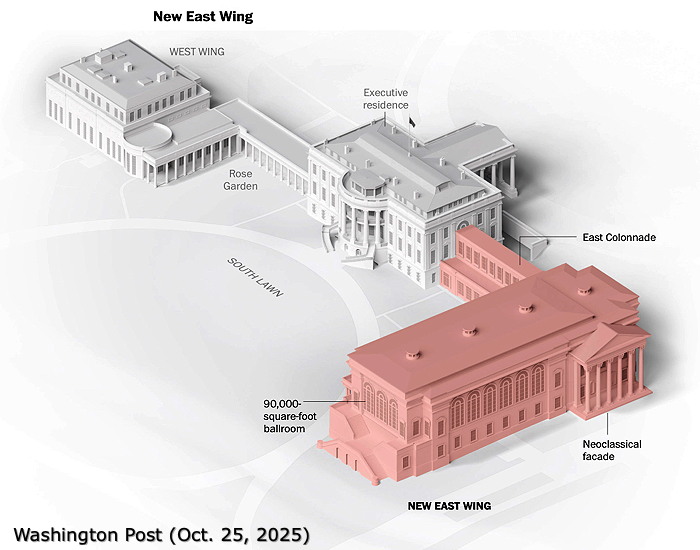
- Tearing down the East Wing of the White House to build a 90,000 sq. ft. ballroom (which may be named after him)
- Publicly ridiculing and denouncing White House reporters who ask him questions he find objectionable
- Claiming to have superior knowledge compared to long-term experts ("I am a stable genius.")
- Narcissism vs. Solipsism?
Other famous individuals who have been considered narcissists include
- Historical Figures: Hitler, Stalin, Napoleon Bonaparte, Caligula & Nero (Ancient Rome)
- More Contemporary Figures: Steve Jobs (Apple), Ye (Kanye West), Kim Kardashian
This page was originally posted on 04/10/2018
![[PSY 101
Graphic]](../psy101graphics/intro_25.jpg) PSY 101
PSY 101