![[Home]](../psy101graphics/homep.gif)
Oct. 14, 2025
![[Psychology Images]](../psy101graphics/intro_25.jpg) Class
21: Motivation I • Theories & Hunger as Motivated
Behavior
Class
21: Motivation I • Theories & Hunger as Motivated
Behavior
|
Oct. 14, 2025 |
PSY
101
Class
21: Motivation I • Theories & Hunger as Motivated
Behavior |
|
Motivation
Goal-Directed Behavior
WHY DO YOU DO WHAT YOU DO ???
What is it that you want or desire?
Motivational Theories and Concepts
1. Drive Theories ("push")
Walter Cannon: Organisms seek to maintain homeostasis (a state of physiological equilibrium, balance, or stability). NOT IN BOOK: The process of achieving homeostasis by means of physiological or behavioral changes is called allostasis (i.e., using multiple different methods to reach equilibrium ["allo-" to achieve balance = "stasis"] Temperature = 98.6 degrees ==> too high leads to sweating and too low leads to shivering
Drive = (a) internal state of tension which (b) motivates an organism (c) to act to reduce the tension
- For example, going without food or drink for a period of time causes us to feel an internal craving for either food or liquid. Individuals who are exposed to cold are driven to seek warmth.
- Cannot explain all behavior, e.g., people often eat when they are not hungry
2. Incentive Theories ("pull")
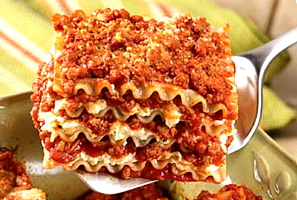

- Incentive = external goal which can motivate behavior
- For example, the smell of a wonderful dinner cooking, recognition for a job well done by your boss, getting on the Dean's List, earning a lot of money so that you can buy what you want
3. Evolutionary Theories
- Evolution favors those behaviors which maximize reproductive success (i.e., attracting a mate & passing genes on to offspring). For example,
- dominance by males attracts females who judge themselves better protected
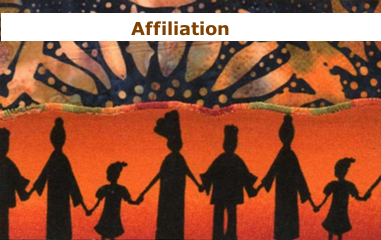
- affiliation (need for belonging) assists in raising offspring by bringing together more helpers

4. Diversity of Motivations
Biological Social Originate in bodily need
- Hunger
- Thirst
- Sex
- Sleep, etc.
Originate in social experiences
- Achievement (need to stand out, do well, excel)
- Affiliation (need to belong, to be bonded with others)
- Nurturance (need to nourish & protect others)
- Play, etc.
| Hunger & Eating |
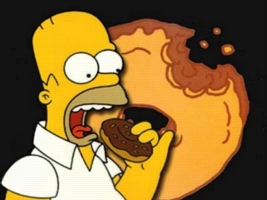 |
What can we say about the causes of Homer Simpson's insatiable appetite for doughnuts? |  |
A very complicated set of interrelated & interacting forces & mechanisms
appears responsible for the final experience of hunger and eating.The material below demonstrates the notion of multifactorial causality
I. Biological Factors in the Regulation of Hunger
- The physiological regulation of hunger described here is a form of a drive theory involving homeostatic mechanisms
![[Brain
Hypothalamus]](../psy101graphics/hypo_brain.jpg)
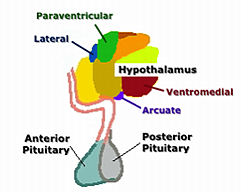
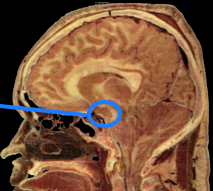
A. Brain: Interconnected neural circuits in the hypothalamus
Lateral Hypothalamus (LH): damage causes animal to stop eating; hence, LH may normally play a role in initiating eating
- Ventromedial Hypothalamus (VMH): damage causes animal to eat excessively & gain weight; hence, VMH may normally play a role in stopping eating
- Arcuate Nucleus: Dual set of neurons = (1) responsive to hunger signals and (2) respond to satiety signals (satiety = feeling of being full, "enough")
- Paraventricular Hypothalamus (PVH): modulation of hunger (either increasing or decreasing)
- Neurotransmitters: neuropeptide Y (increases eating of carbohydrates if injected in PVH) and serotonin (decreases fat & food intake) in particular
B. Digestive & Hormonal Regulation
- Signals from the stomach are sent to the brain
- Stomach distention (how full the stomach is) signal sent via the vagus nerve
- Other nerves send information about the nutrients in the stomach itself
- Hormones
- Empty stomach produces hormone ghrelin which promotes stomach contraction & hunger
- Upper intestine releases the hormone CCK (= cholecystokinin) which signals satiety as well
Insulin: hormone which allows glucose to be extracted from the blood
- Insulin increase leads to increase in hunger. Judith Rodin (1985) showed that just seeing or smelling food can cause insulin to be secreted
- Leptin: hormone (discovered in the early 1990s) produced by fat cells in body and circulating in the bloodstream. It signals to the brain the size of the body. And, for most people when they have reached a certain body size, leptin decreases the urge to eat.
- These hormonal signals (the fluctuation of insulin, ghrelin, CCK, and leptin) converge on the hypothalamus (esp. the arcuate & paraventricular nuclei) to affect eating
II. Environmental Factors in the Regulation of Hunger
- The environmental factors in hunger represent an incentive theory of motivation to eat
A. Food Availability and Related Cues
Incentive value of food
- Palatability = good taste increases consumption
- Quantity = Availability of food generally increases eating. Individuals tend to eat the amount of food put in front of them.
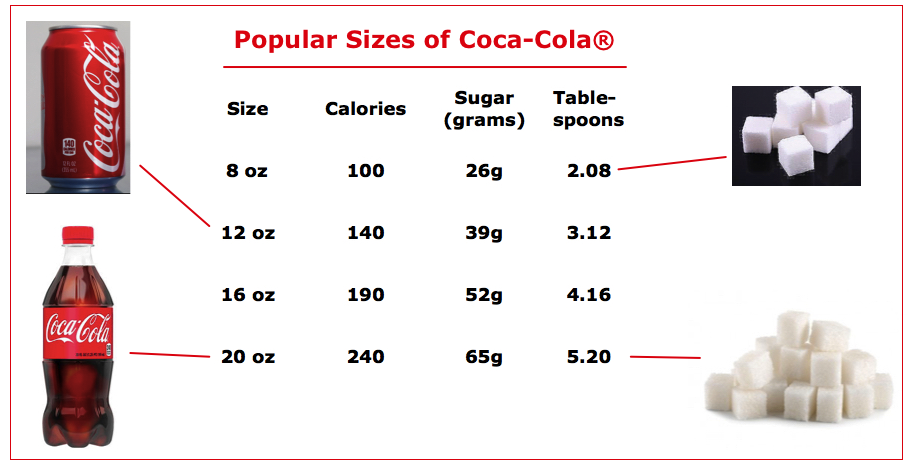
- In recent years, many foodstuffs have gotten larger and larger in size
- Diners at a buffet restaurant with large plates were found to consume 45% more food than diners given smaller plates.
- Variety = the more the number of foods to choose from, the greater the likelihood you will try to eat more varieties. This is the reverse of the notion of sensory-specific satiety = if you eat a lot of the same food, the appeal of that food decreases.
- Presence of Others. We eat more when we are with other people (one study found individuals eat 44% more with others than when they are by themselves).
- Stress = between 40-50% of people increase their consumption of food when they experience stress. Further, there is a shift to less healthy food choices at those times (e.g., fatty foods and sugars)
- Exposure to Cues = When we see delicious-looking foods (e.g., in television ads or online) we tend to feel greater levels of hunger and increase our food intake.
B. Learning: What foods do you adore? Despise? When did you learn to love or hate those foods?
- Innate (in-born) taste preference for high-fat foods and sweet foods
- Many other taste preferences come from experiences where they are paired with other pleasant tasting foods
- Observation of others eating, e.g., younger children more apt to taste food if adult does. We may also see negative reactions of others and develop similar aversions.
- Arachnids as Food [Wikipedia]
III. The Roots of Obesity: Eating and Weight
- Obesity = the condition of being overweight
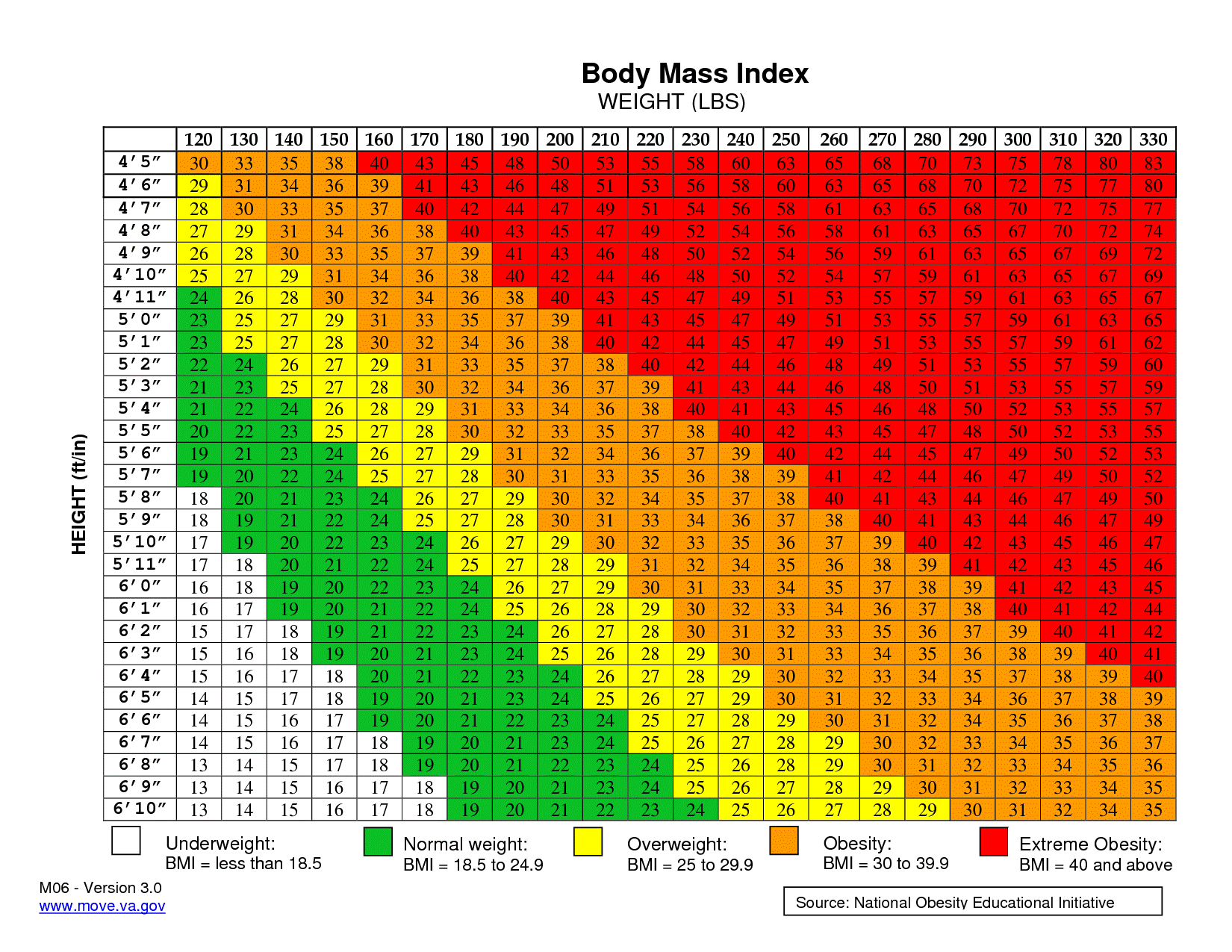
- Body Mass Index (BMI) = weight (in kgms)/height (in m.) squared
- 18.5 to 24.9 = normal
- 25-29.9 = overweight
- 30-39.9 = obese
- over 40 = morbidly (severely/extremely) obese
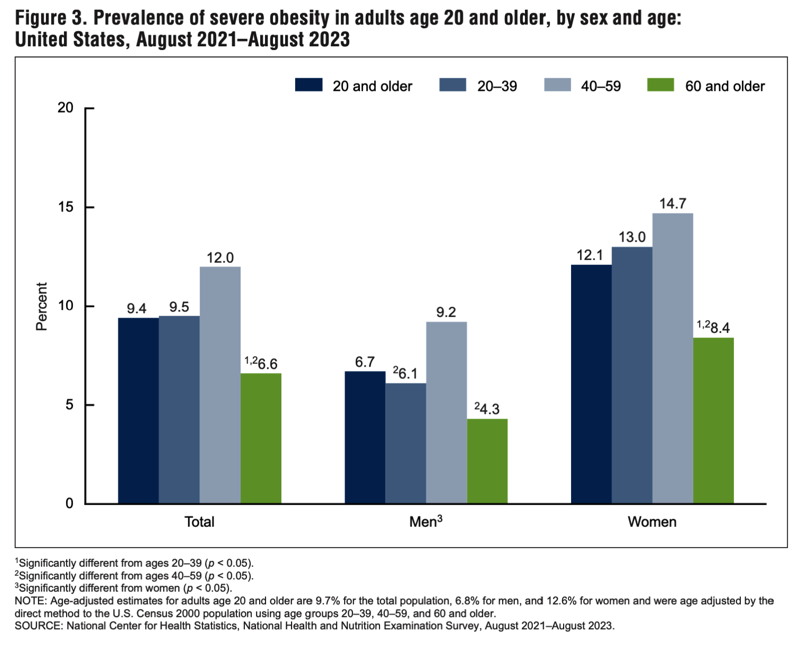
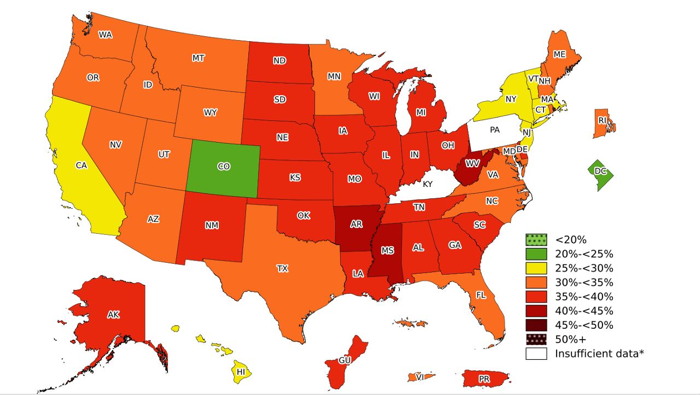
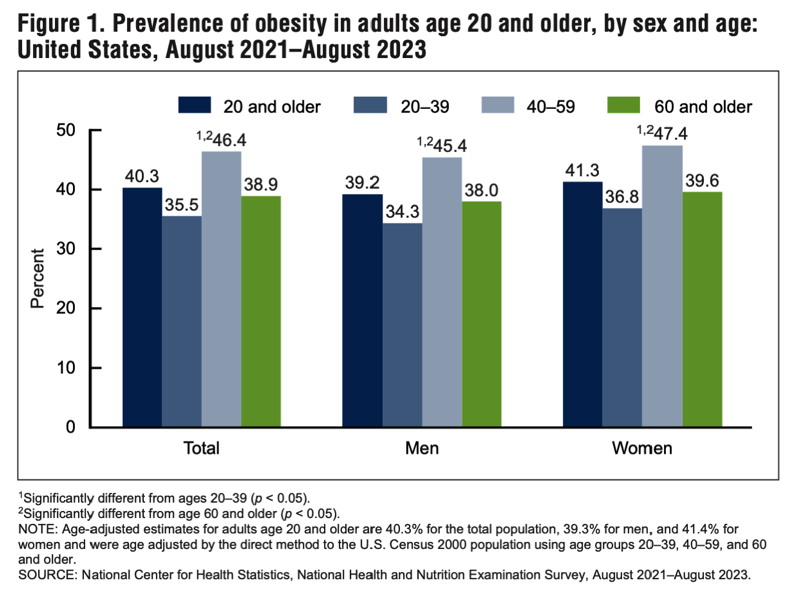
- According to the CDC in 2021-2023, 40.3% of adult Americans are obese (= ca. 105 million) and 9.4% of adults were severely obese (= ca. 24.5 million; Emmerich et al., 2024). Note that while there were no differences between men and women in the prevalence of obesity, women were more likely to be severely obese than men.
Why are so many people in industrialized nations obese? (more multifactorial causality)
A. Genetic Predisposition
- Studies of twins show moderately high levels of heritability for weight in men and women
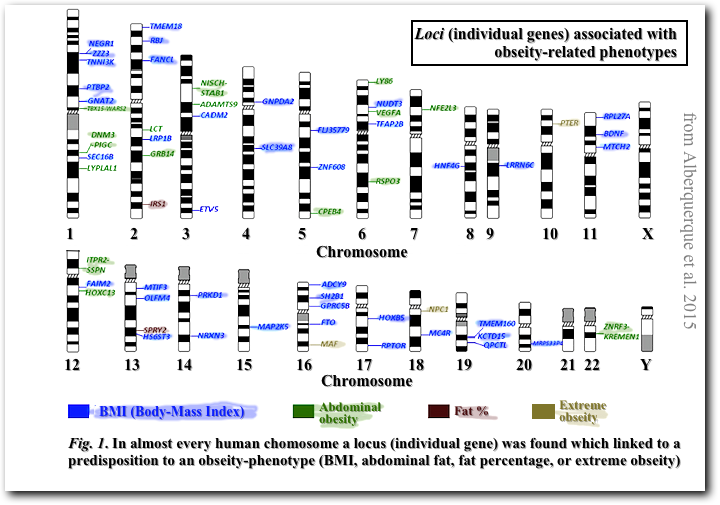
- A large number of individual genes are associated with increased vulnerability to obesity (see below)
B. Excessive Eating and Inadequate Exercise
C. Inadequate Sleep
- Overweight people eat too much and exercise too little (see below in Section D)
- Exposure to high-calorie, high-fat food, sugar sweetened drinks, etc. (see below in Section D)
- Technology has reduced the need for exercise and activity
- More recent work finds that decreased levels of sleep (e.g., under 7.5 to 8 hrs/night) is related to obesity
D. Socio-economic Factors in Industrialized/Developed Nations [Not in textbook; ]
- The evidence suggests that individuals in industrialized nations actually expend more energy than those in other socio-economic settings. However, despite higher energy expenditure, an even higher caloric intake appears principally related to higher levels of obesity (McGrosky et al., 2025).
- People in industrialized nations tend to follow diets that are high in calories and trend to be very good tasting, i.e., consuming ultra-processed foods ["these foods are energy-dense, so you get a lot of calories in every bite. They’re also designed to taste great—flavorings and textures that are really appealing and hard to stop eating. They’re engineered that way" Dr. Herman Pontzer quoted in Massari, 2025].
E. The Notion of a "Set Point" in metabolism
- There appear to be biological mechanisms which counter the effort to lose weight.
- As individuals begin to shed pounds, metabolism tends to decrease.
- Textbook points out that lowered levels of stored fat lowers levels of leptin & increases hunger
- However (not in textbook) other work finds that obese individuals may be particularly insensitive to overall leptin levels even when they are high.
- As a result, it seems as if the body establishes a "set point" and makes an effort to keep an individual's weight at that point.
References
Massari, P. (2025, August 8). Why are rich countries obese? Harvard Griffiin Graduate School of Arts and Sciences News. https://gsas.harvard.edu/news/why-are-rich-countries-obese
McGrosky, A., Luke, A., Arab, L., … the IAEA DLW Database Consortium. (2025). Energy expenditure and obesity across the economic spectrum. PNAS, 122(29), e2420902122. https://doi.org/10.1073/pnas.2420902122
This page was originally posted on 10/16/03